
For years, I have been interested in a deceptively simple question: How do we become the people we are?
None of us arrives in the world as a finished person. We are shaped by families, friendships, successes and disappointments, schools and workplaces, communities and cultures. We are changed by people who love us and by people who hurt us. We carry memories, expectations, habits, convictions, losses, hopes, and stories about who we are. Through all of those experiences, something keeps taking shape.
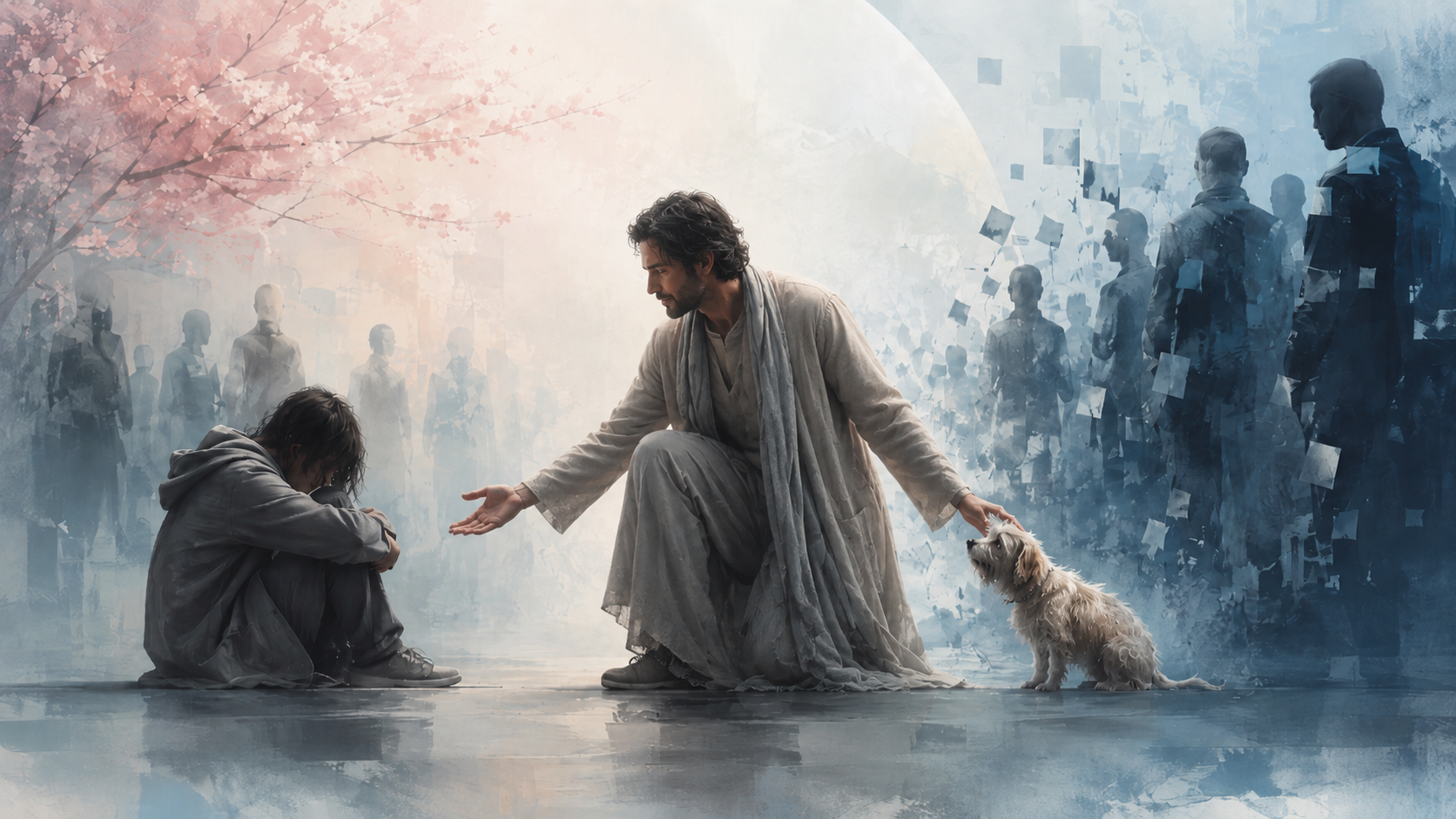
I have called that person the Emergent Self: the self that is continually becoming through the experience of living.
Over time, though, another question began to interest me just as much. Given the person I have become, who am I becoming next?
That question is the beginning of The Next Self.
A Self Is Never Quite Finished
We often speak about identity as though it were settled. We say, “This is just who I am,” or “I’ve always been this way.” Sometimes those statements reflect genuine self-knowledge. At other times, they can become limitations we no longer recognize as limitations.
Life has a way of showing us that identity is less fixed than we sometimes imagine. A career ends, a relationship begins or comes apart, someone we love dies, illness changes what we thought the future would look like, or retirement alters the structure of everyday life. Sometimes the change is much quieter. Nothing dramatic happens; we simply realize that an old way of living no longer fits as comfortably as it once did.
In such moments, the person we have been does not disappear. Our history remains with us. Yet something new may begin to emerge alongside it: a different way of understanding ourselves, another possibility, a question we had never before thought to ask.
That is what I mean by the Emergent Self. We become through our encounters with life—through what happens to us, what we make of it, and how we respond.
The Next Self turns our attention slightly forward. It asks not only how we became who we are, but where our becoming might lead from here. It is less a destination than a direction.
Not a New-and-Improved You
There is no shortage of advice telling us that we should become better versions of ourselves. We are urged to become more productive, more successful, more disciplined, more attractive, more youthful, or more efficient. Self-improvement has become an industry.
That is not what I mean by the Next Self.
The Next Self is not an endless project of correcting ourselves. Sometimes becoming involves adding something to our lives, but sometimes it requires letting something go. Growth may mean taking on a new challenge, but it may also mean finally giving up the need to prove something. It may involve becoming more confident, or becoming less certain and more curious. It may mean learning to speak more clearly, or learning at last to listen.
For one person, the next self may emerge through a new relationship, a new vocation, or a creative undertaking. For another, it may take shape through grief, recovery, acceptance, or a decision to step away from something that has become harmful. Retirement may open a new sense of purpose, or it may offer the freedom to stop measuring life by productivity altogether.
Sometimes what we call growth does not look like growth from the outside. It may look like rest. It may look like setting a boundary. It may look like changing one’s mind. It may look like admitting that a goal once pursued no longer matters.
Becoming is not always about adding more. Sometimes it is about becoming more deliberate about what we carry forward.
What Happens Between Experience and Response?
There is a simple movement beneath much of this becoming. Something happens. We decide what we think it means. Then we respond.
I describe this as EIR: Experience, Interpretation, Response.
The process is so familiar that we barely notice it. Suppose someone important to you does not return your telephone call. The unanswered call is the experience. Almost immediately, though, interpretation begins. You may think the person is angry with you, that you have done something wrong, that they no longer care, that they are simply busy, or that something may have happened to them.
The experience itself has not changed, but the meaning attached to it has. Research on cognitive appraisal likewise shows that the way people evaluate events is closely associated with their emotional responses.That meaning then influences the response. One interpretation may lead to anger, another to anxiety, another to withdrawal, and another simply to waiting until tomorrow and trying again.
This same movement occurs in far more consequential situations. A physician gives us difficult news. A supervisor criticizes our work. A friend challenges something we believe. An adult child makes a choice we do not understand. A political event frightens or angers us. Someone treats us with unexpected kindness. Something happens, we interpret what it means, and we respond.
The response does not simply end the episode. It becomes part of what happens next.
That is why EIR matters to the idea of the Next Self. Our responses accumulate. Over time, they participate in shaping the people we become.
Interpretation Is Not Reality
One of the most difficult things to recognize is that our interpretation of an experience is not necessarily the same thing as the experience itself.
We are very good at confusing the two.
Each of us brings a history into the present. If we have experienced rejection, silence may feel like rejection. If disagreement has often led to hostility, a different opinion may feel like an attack. If we have been humiliated, a remark that another person would scarcely notice may awaken an old wound. If we were repeatedly told that we were incapable of something, an opportunity may feel more threatening than exciting.
These interpretations are not foolish or irrational simply because they arise from the past. They come from somewhere. They often developed for understandable reasons. Some may even have helped us survive difficult circumstances.
But they are not always the only interpretations available to us.
That recognition creates a small but important opening. We may not be able to change what happened, but sometimes we can examine the meaning we have given it. We can ask whether an old interpretation still fits the present situation. We can become curious about why we responded as we did. We can consider whether another response is possible.
Sometimes that opening is very small. Yet a different interpretation may make possible a different response, and a different response may alter what happens next.
That is one way a next self begins to take form.
We Do Not Control Becoming, but We Participate in It
The idea of the Next Self is not a promise that we can become anything we want if only we try hard enough. Human life is not that simple.
There is much we do not control. Bodies age. People die. Relationships fracture. Illness arrives. Economies change. Institutions fail us. Other people make decisions that affect our lives. We are also shaped by forces much larger than ourselves: families, communities, workplaces, religions, cultures, political systems, and historical moments.
Long before we have the language to describe ourselves, the world is already describing us. It tells us what someone of our age should be like, what success should look like, what kinds of relationships are acceptable, whose voices matter, who belongs, and who does not. Some of those messages help us find our place in the world. Others become burdens we may spend years trying to understand.
So the Next Self does not begin with the fantasy of total personal control. It begins with something more modest and, I think, more useful: the possibility that we can participate in who we are becoming.
We can become more attentive to what we are experiencing. We can become curious about the meanings we are making. We can notice responses that have become automatic. We can ask whether an old story still deserves authority over our present life. And sometimes we can choose another response.
Not every time. Not perfectly. But sometimes enough to change the direction of what comes next.
Whose Life Am I Living?
There is another reason this question of becoming matters. We can spend years becoming someone without ever asking whether that is the person we actually wanted to become.
A career may have been expected of us. A religious identity may have been inherited. A definition of success may have come from our parents or peers. A political identity may have come from the community around us. Our assumptions about aging, gender, work, family, or achievement may have been absorbed so gradually that they no longer feel like assumptions at all.
They simply feel like reality.
Then something happens that interrupts the story. A transition, a loss, a conversation, a disappointment, an unexpected opportunity. Suddenly a question appears: Do I still believe this?
That question can be unsettling because it disturbs the continuity of the life we thought we understood. Yet it can also be freeing. It allows us to distinguish between what we have inherited and what we now choose to affirm.
The Next Self begins, in part, with permission to ask those questions.
There Is No Final Version
There is no final Next Self waiting at the end of this process.
We do not graduate from becoming.
The person we become next will have new experiences. Those experiences will require interpretation. Those interpretations will lead to responses, and those responses will become part of another emerging life.
That does not mean we wander without direction. It means direction itself can change. Goals change. Relationships change. Bodies change. The world changes. We change.
Sometimes maturity means remaining faithful to a direction we have chosen. Sometimes it means recognizing that the direction itself needs to change. There is wisdom in persistence, but there can also be wisdom in letting go.
The task is not to discover a single perfected self and remain there forever. It is to remain awake to the movement of our own lives.
Why The Next Self Exists
The Next Self begins with the conviction that human lives deserve that kind of attention.
Here we will explore becoming from many directions: identity and personal growth, relationships and belonging, work and leadership, aging and transition, health and healing, meaning and spirituality, technology and the changing world around us, dignity and justice, creativity and culture. Some of these conversations will remain close to personal experience. Others will reach outward toward institutions, communities, and the social worlds we are creating together.
But the person will remain at the center.
The purpose is not to offer a formula for becoming. There isn’t one. It is to create a place where we can pay closer attention to experience, examine the meanings we make, and consider the responses available to us.
A place where experience becomes reflection, and reflection becomes response.
Because somewhere in that movement, the person we are becoming next has already begun to emerge.
Perhaps the best place to begin, then, is not with an answer but with a few questions:
What am I experiencing now? What am I making it mean? How am I responding?
And finally:
Who is that response helping me become?